Pain, swelling or repeated inflammation around a wisdom tooth deserves a dental examination, but it does not automatically mean the tooth must be removed. Some wisdom teeth are healthy, fully erupted and easy to clean. Others remain partly or completely trapped under the gum or bone and can contribute to infection, decay or damage to the tooth next to them.
At K&J Dental Clinic, the decision starts with an examination and appropriate imaging. We look at the tooth, the surrounding gum and bone, the neighboring tooth and the symptoms you have experienced. If the tooth can be kept safely, monitoring or another treatment may be more appropriate. When extraction is necessary, we explain why, what the procedure is likely to involve and what to expect during recovery.
When Wisdom Teeth May Need to Be Removed
An impacted wisdom tooth is not automatically a reason for surgery. A healthy tooth that is not causing disease can often be monitored during routine dental examinations.
Removal may be considered when the examination or X-ray shows a problem that cannot be managed predictably while the tooth remains in place. Examples include:
- repeated or severe inflammation of the gum around a partly erupted tooth, known as pericoronitis
- decay in the wisdom tooth that cannot be restored
- decay, gum disease or resorption affecting the neighboring tooth
- an abscess or another infection associated with the tooth
- a cyst or another abnormal change around the tooth
- a fractured tooth or other damage that cannot be treated
- a tooth that interferes with another necessary dental or jaw procedure
Food trapping, plaque or one mild episode of gum inflammation does not always lead directly to extraction. The dentist may first discuss cleaning, short-term treatment and follow-up. The recommendation depends on the severity and recurrence of the problem, the position of the tooth and the risk to nearby structures.
What Is an Impacted Wisdom Tooth
Wisdom teeth are the last molars at the back of the mouth. An impacted wisdom tooth has not fully reached a functional position in the mouth. It may be completely covered by gum or bone, partly erupted, angled toward the tooth in front of it or positioned horizontally.
Partly erupted wisdom teeth can be difficult to clean because food and plaque collect beneath the gum. This can contribute to inflammation, infection, decay or gum problems. A fully impacted tooth may cause no symptoms, but its position and the health of the surrounding tissues should still be assessed when there is a clinical reason to do so.
Examination and Dental Imaging
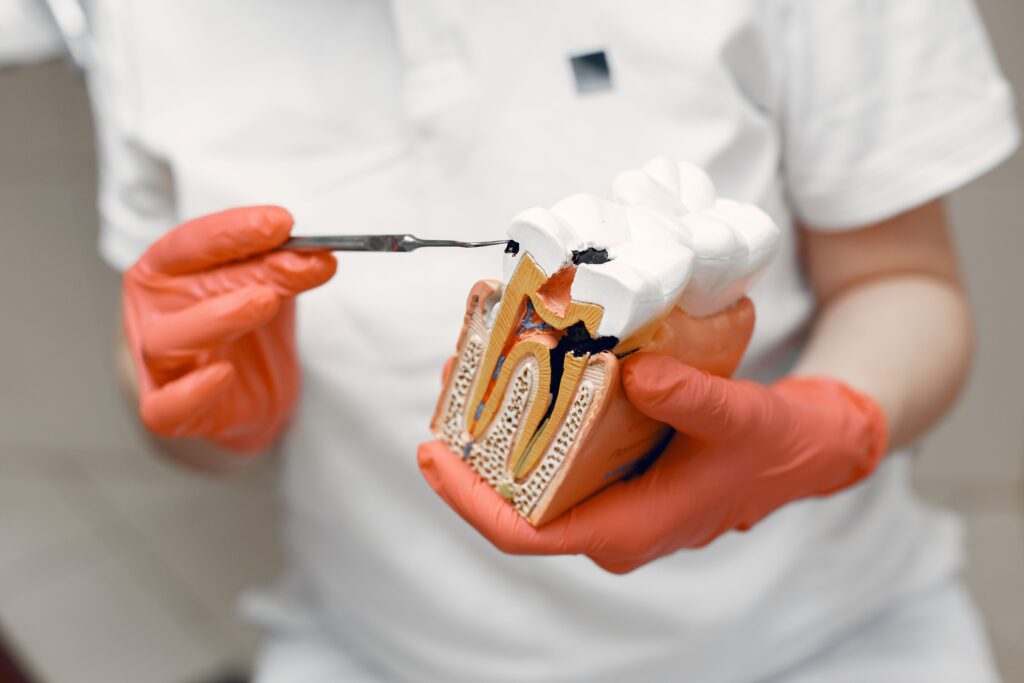
The dentist will ask about pain, swelling, bad taste, difficulty opening the mouth and any previous episodes of inflammation. The examination also checks the gum around the wisdom tooth, the condition of the neighboring tooth and whether the area can be cleaned effectively.
An X-ray helps show the angle and depth of the tooth, the roots and the surrounding anatomy. Panoramic imaging is available at K&J. If more detailed imaging is clinically necessary, the dentist will explain what is needed and where it should be performed.
The assessment is especially important for lower wisdom teeth because their roots may be close to nerves that supply feeling to the lower lip, chin and tongue. Upper wisdom teeth may be close to the maxillary sinus. These relationships can affect the treatment plan and the risks that should be discussed before consent.
Monitoring Instead of Extraction
When a wisdom tooth is healthy and not causing a problem, leaving it in place may be the most sensible option. Monitoring may include routine examinations, attention to cleaning and an X-ray when clinically indicated.
Monitoring is an active decision, not an assumption that the tooth will never cause trouble. Contact a dentist if you develop pain, swelling, a bad taste, difficulty opening your mouth or repeated food trapping around the tooth.
Simple and Surgical Wisdom Tooth Extraction
A wisdom tooth that has fully erupted and can be reached easily may be removed with a straightforward extraction. The dentist loosens the tooth and removes it from its socket.
An impacted or difficult-to-reach tooth may need a surgical extraction. Depending on its position, the dentist may make a small opening in the gum, remove a limited amount of surrounding bone or divide the tooth into smaller sections. Stitches may be used when needed.
K&J performs tooth extractions, including impacted wisdom tooth extractions. If the examination shows that a case requires care in another setting or by a clinician with different expertise, the referral options should be explained before treatment.
What Happens During Wisdom Tooth Removal
The exact steps depend on the tooth and the imaging findings, but treatment usually follows this sequence:
- Examination and treatment planning. The dentist confirms why removal is being considered and discusses reasonable alternatives.
- Imaging review. The tooth’s position, roots and relationship to nearby structures are assessed.
- Anesthesia. Wisdom teeth are normally removed under local anesthesia so the area is numb. K&J also offers nitrous oxide for suitable patients, subject to an individual assessment.
- Extraction. The tooth is removed using a straightforward or surgical technique, depending on its position.
- Aftercare. The dentist checks the area and gives instructions for cleaning, eating, activity, medication and follow-up.
You may feel pressure or movement during an extraction even when the area is fully numb. Tell the dentist if you feel sharp pain or if you need a pause.
Risks and Possible Complications
Most wisdom tooth extractions heal without a serious problem, but no extraction is risk-free. Your individual risk depends on the position of the tooth, the shape of the roots, its relationship to nerves or the sinus, your health and the complexity of the procedure.
Possible effects and complications include:
- pain, swelling, bruising or temporary stiffness of the jaw
- bleeding from the extraction site
- infection
- dry socket, a painful condition in which the protective blood clot does not form properly or is lost before the socket has healed
- damage to the tooth, filling or crown next to the wisdom tooth
- temporary, and rarely lasting, numbness, tingling or altered sensation in the lip, chin or tongue after removal of a lower wisdom tooth
- an opening between the mouth and the sinus after removal of an upper wisdom tooth
This list is general. The dentist should explain the risks that apply to your tooth and answer your questions before you agree to treatment.
Recovery After Wisdom Teeth Removal
Recovery differs from one person to another. A straightforward extraction may settle more quickly than a difficult surgical extraction. Pain, swelling, jaw stiffness and difficulty chewing are common after treatment and should gradually improve rather than become more severe.
Follow the instructions given for your procedure. General advice may include:
- rest and avoid strenuous activity for the period recommended by your dentist
- wait until the numbness has worn off before chewing, so you do not bite your lip, cheek or tongue
- begin with soft foods and avoid foods that are hard, crunchy, very hot or likely to become trapped in the socket
- avoid smoking because it increases the risk of infection and dry socket
- do not rinse or spit forcefully during the first 24 hours unless your dentist gives different instructions
- clean the rest of your teeth carefully and begin gentle rinsing after the first day if advised
- take medication only as directed by your dentist or another qualified clinician
The time needed away from work depends on the difficulty of the extraction, how you feel and the type of work you do. Ask the dentist for guidance based on your procedure rather than relying on a fixed recovery promise.
When to Contact a Dentist After Extraction
Contact the clinic if bleeding does not settle, pain or swelling becomes severe or continues to worsen, or you develop a fever, a bad taste, discharge or feel generally unwell. Increasing pain after an initial improvement can be a sign of dry socket or infection and should be assessed.
Seek urgent medical care if swelling affects breathing or swallowing. If numbness or altered sensation lasts beyond the period explained by the dentist, contact the clinic for advice.
K&J provides emergency dental care during clinic hours and during the clinic’s published extended emergency hours. Call 02-625-0870 before travelling so the team can assess the situation and arrange care according to clinical need and availability.
Other Tooth Extractions
Wisdom teeth are only one reason a tooth may need to be removed. Extraction may also be considered when a tooth is too badly decayed or fractured to restore, has an infection that cannot be treated predictably, or has lost too much support because of advanced gum disease.
Before recommending extraction, the dentist should consider whether treatment such as a filling, root canal treatment, crown or periodontal care could preserve the tooth. The right option depends on the amount of healthy tooth remaining, the condition of the root and bone, the expected long-term result and the patient’s priorities.
Wisdom teeth usually do not need to be replaced after removal. If another tooth is extracted, the dentist can discuss whether replacement is needed and explain the relevant options as a separate part of the treatment plan.
Wisdom Teeth Removal Cost in Jerusalem
The cost depends on the findings at the examination. A fully erupted tooth that can be removed straightforwardly is different from an impacted tooth that requires a surgical approach. Imaging, the position of the roots and the complexity of the procedure may also affect the treatment plan and cost.
K&J provides a written treatment plan with proposed costs after the necessary assessment. The clinic does not use one online price for every extraction because the procedure cannot be priced accurately without examining the tooth.
Wisdom Teeth Removal at K&J Dental Clinic
K&J has provided dental care in Jerusalem since 1992. The clinic’s approach is to preserve natural teeth when that is medically reasonable and to recommend extraction when keeping the tooth is likely to cause more harm or when it cannot be treated predictably.
For wisdom teeth and other extractions, K&J provides:
- dental examination and treatment planning
- panoramic imaging at the clinic
- straightforward and surgical tooth extractions, including impacted wisdom teeth
- local anesthesia and nitrous oxide for suitable patients
- written treatment plans in English and Hebrew
- follow-up and emergency dental care according to the clinic’s published hours
The dentist will explain whether treatment can be provided at K&J or whether referral is more appropriate for the individual case.
Book an Examination in Jerusalem
If you have pain, swelling or repeated inflammation around a wisdom tooth, an examination can determine whether the tooth should be treated, monitored or removed.
Call K&J Dental Clinic at 02-625-0870 to arrange an appointment.
Address: 29A Keren HaYesod Street, Jerusalem