Experiencing persistent tooth pain or sensitivity? You may need a root canal treatment. At K&J Dental Clinic in Jerusalem, we provide patient-focused root canal treatment designed to eliminate infection, relieve pain, and preserve your natural tooth whenever possible.
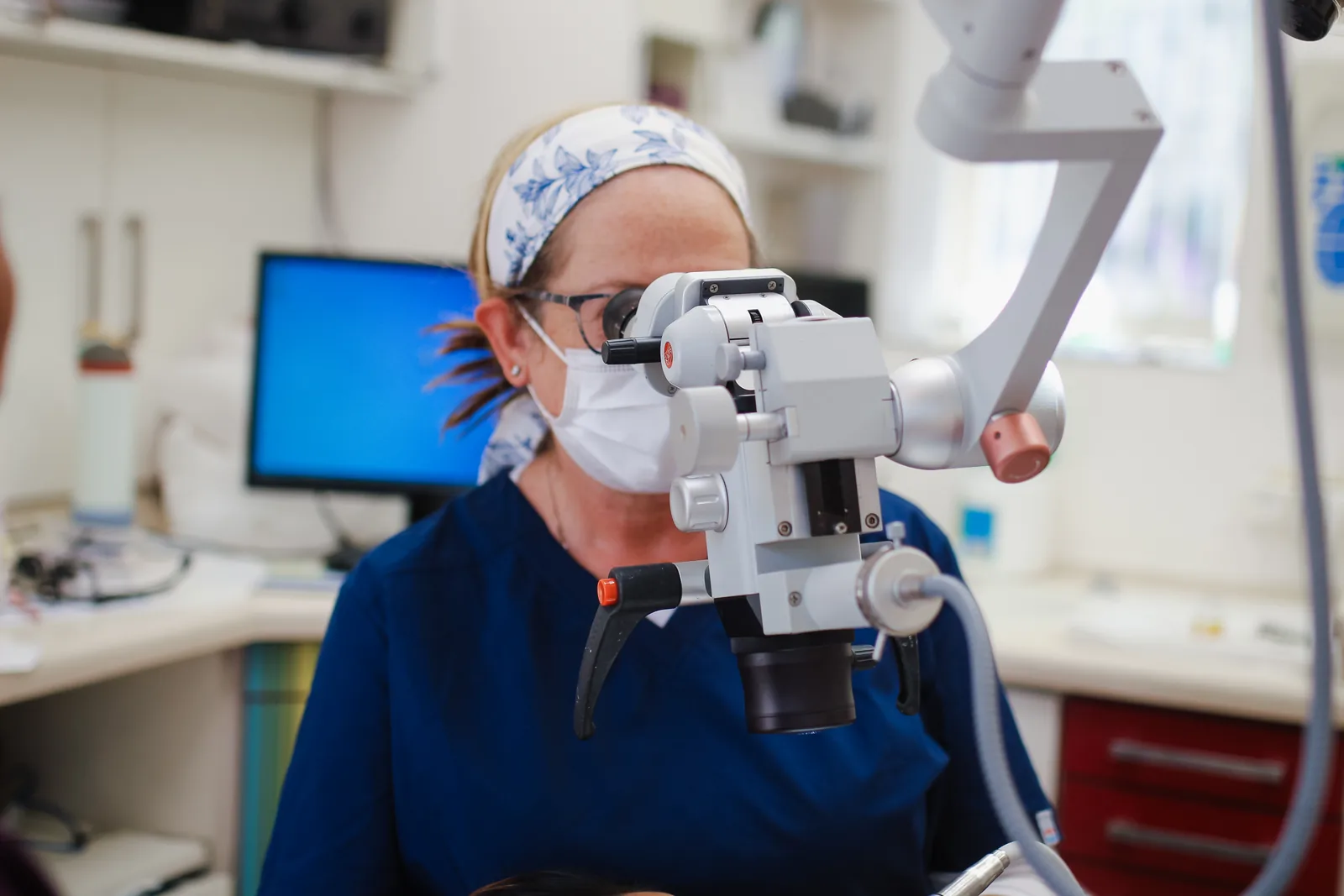
We use a dental microscope for all endodontic treatment at the clinic.
Our experienced dental team combines modern technology, precise diagnosis, and gentle treatment techniques with a focus on patient comfort. Whether you’re suffering from severe tooth pain or have been referred for endodontic treatment, we’re here to help you protect your smile.
Why Choose K&J Dental Clinic for Root Canal Treatment in Jerusalem?
Choosing the right dentist for a root canal is essential. At K&J Dental Clinic, we focus on both clinical excellence and patient comfort.
Our patients choose us because we offer:
- Experienced dentists performing advanced root canal procedures
- Modern digital X-ray technology for accurate diagnosis
- Gentle, effective local anesthesia for pain-free treatment
- Personalized treatment plans tailored to each patient
- Emergency appointments for urgent dental pain (subject to availability)
- English-speaking dental professionals
- Convenient location in central Jerusalem
- A calm, welcoming environment for patients of all ages
Our goal is simple: save your natural tooth whenever possible while making your treatment as comfortable and stress-free as possible.
What Is a Root Canal?
A root canal is a restorative dental procedure used to save a tooth that has become infected or severely inflamed inside its pulp chamber.
The dental pulp contains nerves, blood vessels, and connective tissue. When bacteria reach this inner tissue usually because of deep tooth decay, cracks, repeated dental procedures, or trauma it can cause severe pain, swelling, and infection.
Without treatment, the infection may spread into the surrounding bone, potentially resulting in abscess formation and eventual tooth loss.
A root canal removes the infected tissue, disinfects the canals, seals the tooth, and preserves your natural tooth structure.
Signs You May Need a Root Canal
Many patients wait until the pain becomes unbearable before seeking treatment. Recognizing the warning signs early can help save your teeth.
Common symptoms include:
- Severe or persistent tooth pain
- Pain when chewing or biting
- Lingering sensitivity to hot or cold foods
- Swollen or tender gums
- Facial swelling
- A darkened or discolored tooth
- A persistent bad taste or bad breath
- A pimple-like bump on the gums that drains fluid
Even if your tooth pain suddenly disappears, the infection may still be active. Sometimes the nerve dies while bacteria continue spreading beneath the surface.
If you experience any of these symptoms, schedule a dental examination as soon as possible.
Emergency Root Canal Treatment in Jerusalem
Dental infections rarely improve without professional treatment.
If you experience:
- Severe tooth pain
- Facial swelling
- An abscess
- Trauma to a tooth
- Difficulty chewing because of pain
You should seek dental care promptly.
At K&J Dental Clinic, we provide urgent evaluations for patients experiencing significant dental pain and determine whether emergency root canal treatment is necessary.
What Happens During a Root Canal?
Root canal treatment is typically completed in one or two appointments, depending on the complexity of the tooth.
Examination and Digital X-Rays
Your dentist performs a complete clinical examination and digital imaging to evaluate the infection, tooth anatomy, and surrounding bone.
Local Anesthesia
The area is completely numbed using effective local anesthesia, so the procedure is comfortable and pain-free.
Cleaning the Root Canals
A small opening is created in the tooth to access the infected pulp.
Specialized instruments are used to carefully remove damaged tissue and clean each canal thoroughly.
Disinfection
After cleaning, the canals are disinfected to eliminate bacteria and reduce the risk of future infection.
Sealing the Canals
The cleaned canals are filled with a biocompatible material that seals the tooth and prevents bacteria from re-entering.
Temporary Restoration
In many cases, a temporary filling or temporary crown protects the tooth while healing.
Permanent Crown or Restoration
Because root canal-treated teeth may become weaker over time, many patients receive a permanent dental crown.
The crown is custom-designed to match your natural teeth in color, shape, and function, restoring both appearance and strength.
Root Canal vs. Tooth Extraction
Whenever possible, preserving your natural tooth is the preferred treatment.
Compared with extraction, a root canal offers several important advantages:
- Preserves your natural smile
- Maintains normal chewing function
- Prevents neighboring teeth from shifting
- Helps preserve jawbone health
- Avoids more complex treatments such as dental implants or bridges
While extraction is sometimes necessary, saving the tooth is often the healthiest long-term solution.
What Happens If You Delay Treatment?
Ignoring an infected tooth rarely solves the problem.
Without treatment, the infection may:
- Spread into the jawbone
- Cause painful abscesses
- Lead to bone loss
- Increase the risk of tooth extraction
- Require more extensive and expensive dental treatment
Early diagnosis often makes treatment simpler and more predictable.
Root Canal Treatment for Children
Children sometimes require root canal treatment because of deep cavities or dental injuries.
Our dentists use gentle techniques specifically adapted for young patients, with clear communication and a calm environment to reduce anxiety.
When appropriate, nitrous oxide (laughing gas) may be used to help children feel relaxed during treatment.
Root Canal Treatment During Pregnancy
Dental infections should not be ignored during pregnancy.
Routine dental treatment is generally safe during the second trimester, although emergency treatment may be recommended at any stage when infection or significant pain is present.
At K&J Dental Clinic, we use pregnancy-safe local anesthetics and low-radiation digital imaging with protective shielding whenever imaging is necessary.
Does a Root Canal Hurt?
This is one of the most common questions we have heard.
Modern root canal treatment is generally no longer uncomfortable than receiving dental filling.
Thanks to advanced local anesthesia and modern techniques, the procedure itself is typically pain-free.
Some mild tenderness after treatment is normal and usually resolves within a few days with over-the-counter pain medication if needed.
Will I Need a Crown After a Root Canal?
Many back teeth require a dental crown after root canal treatment because they experience significant chewing pressure.
A crown helps:
- Protect the treated tooth
- Restore full chewing function
- Reduce the risk of fracture
- Improve long-term durability
Your dentist will determine whether a crown is recommended based on your individual case.
How Much Does a Root Canal Cost in Jerusalem?
The cost of root canal treatment varies depending on several factors, including:
- Which tooth requires treatment
- The number of root canals involved
- The complexity of the tooth’s anatomy
- Whether this is an initial treatment or retreatment
- Whether a permanent crown is needed afterward
Following your examination, we provide a personalized treatment plan with transparent pricing before treatment begins.
Why Accurate Diagnosis Matters
Not every toothache requires a root canal.
Some cases can be treated with a filling, while others may require periodontal treatment or different restorative procedures.
Our comprehensive examination allows us to identify the exact cause of your symptoms before recommending treatment.
We believe patients should fully understand their diagnosis, treatment options, expected outcomes, and costs before making any decision.
Serving Patients Throughout Jerusalem
K&J Dental Clinic proudly provides root canal treatment for patients throughout Jerusalem, including:
- Rehavia
- Talbiya
- German Colony
- Baka
- Katamon
- Arnona
- City Center
- Old City
- Nachlaot
- Talpiot
- Givat Ram
- French Hill
- Pisgat Ze’ev
- Ramot
- Nearby communities throughout the Jerusalem area
We also welcome English-speaking residents, students, diplomats, tourists, and international visitors seeking high-quality dental care in Jerusalem.
Schedule Your Root Canal Consultation
If you’re experiencing tooth pain, swelling, or prolonged sensitivity, early treatment can often save your teeth and prevent more extensive dental procedures.
At K&J Dental Clinic, we’re committed to providing compassionate care, accurate diagnosis, and advanced root canal treatment tailored to your individual needs.
Call 02-625-0870 today to schedule your consultation and receive expert dental care in Jerusalem.